

(Images courtesy of UNSW, Beaker Street Festival, Trevor Dobson, Flickr and Public Domain Pictures)
Sports psychology, underground farms, saving animals with smartphone apps, how gold is made inside stars… the 2026 National Science Week grants reflect the diversity of Australian science, and the myriad ways it touches all our lives. Whether participants are looking to reflect and wonder, learn something new, explore careers, debate, or laugh, these events will inspire all Australians to celebrate and engage with science.
28 grants were awarded by the Australian Government through the Inspiring Australia program for events for National Science Week 2026. Just some of these events include:
- A look at the hidden hydroponic indoor farm growing food right under Barangaroo, next to the Sydney Harbour.
- A virtual reality experience where the brains meet brawn, as Toowoomba Clydesdales rugby players provide insights into sports psychology.
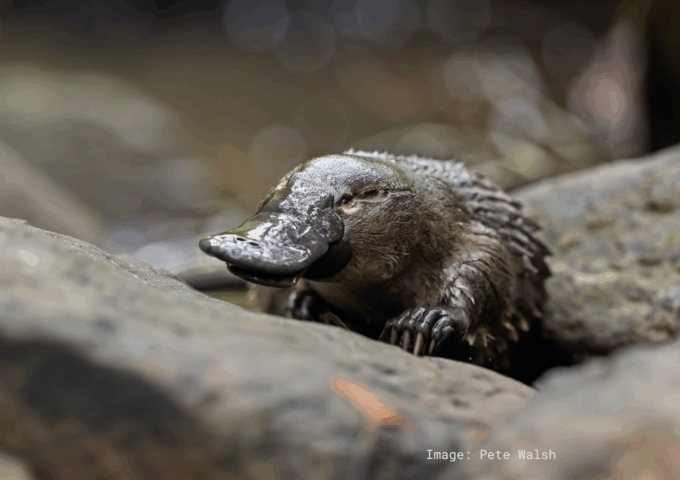
- Walks, talks, First Nations knowledge and practices and a film about the illusive but iconic Malunggang- platypus, and Rakali- water rat, that in waterways around the nation’s capital.
- A collaborative project between Alice Springs and Chile to explore our shared view of the stars through astronomy and poetry.
- A celebration of 60 years of Western Australia’s Busselton Health Study. A vintage caravan will tell the story of over 20,000 participants who have helped solve many health mysteries, and of the latest work improving our understanding of chronic disease.
A full list of nationally funded events can be seen below.
More information will be shared about these events on the National Science Week website and social media channels (Instagram and Facebook) in coming months.
National
SCINEMA International Science Film Festival
Cris Kennedy
SCINEMA International Film Festival 2026 will bring a showcase of science features, shorts, documentaries, animated and experimental films from filmmakers around the world to city screens, community libraries and town halls throughout Australia.
For the past 25 years, the goal of SCINEMA has been to captivate Australians with the wonder of science through the medium of film. Early in the year, established and budding filmmakers submit their films for consideration for the prestigious international competition or the student film competition.
A selection of entries and winners will then be curated into a free nation-wide Community Screening Program for National Science Week where schools, councils and community groups anywhere—from a school gym in Geraldton to a library in Lismore—can take part. They will receive online access to curated SCINEMA films, study notes and activities, with the flexibility to run their own screenings, panels or competitions.
Physics Fun & Games – Creative Brains & Teamwork Solve Problems!
The Institution of Engineers Australia
Thousands of students and community members across 10 venues around the country will get first-hand engineering experience, exploring how hydraulic arms make a little bit of effort go a long way.
The Hydraulic Arm STEM Challenge will introduce participants to Pascal’s principle and fluid power, demonstrating how simple machines create mechanical advantage for precise, controlled movement. This hands-on activity highlights real-world applications of science in engineering, from ancient tools to space technology, to inspire future engineers.
Participants will work with professional and student engineer facilitators in small groups to solve increasingly complex challenges, working with their hydraulic arm to move and stack objects and deconstruct a challenging puzzle box.
Breaking Barriers: Digital Expansion of the Marie Curie Lecture Tour
Australian Institute of Physics
Meet astrophysicist and wave hunter Dr Karelle Siellez. She specialises in the study of explosive cosmic events– the kind of cosmic phenomena that produce the Universe’s gold. She will tour Australia as the 2026 Women in Physics Lecturer.
The Marie Curie Lectures have been showcasing outstanding women in physics since 1997 and now the national tour is set to reach even bigger audiences through digital delivery.
Designed to inspire future physicists and engage the public with Australian science, the physical tour will span nine cities and regional centres, led by award-winning researchers who are also gifted communicators. The new digital program, with livestreamed and recorded events, will ensure students and audiences in regional and remote areas can engage with leading physicists and science communicators.
Australian Capital Territory
Malunggang Connections: Science, Culture and Community Through Platypus
Environment, Planning and Sustainable Development
Come for the malunggang- platypus and rakali- water rats; stay for science, First Nations knowledge, and a water bug hunt.
The waterways around Canberra are home to platypus, known in Ngunnawal Country as the malunggang, and rakali, the native water rat that is often referred to as Australia’s otter.
Malunggang Connections will involve 500 + people in a suite of activities centred around these curious creatures, including a First Nations Platypus Symposium, guided platypus and rakali walks to spot them in their natural environment, water bug hunt bioblitzes to collect and identify aquatic macroinvertebrates (aka platypus food), a film screening of ‘The Platypus Guardian’, and platypus and rakali surveys.
Foodie Fun Play!
Twisty Science Pty Ltd
Can balloons get kids eating and loving their veggies? Show-and-tell takes a deliciously twisted turn with Dr Chloe Lim. The former reality TV star and trained molecular biologist (with a PhD in medical science) introduces preschoolers and primary school kids to healthy eating via balloon twisting and tasting stations.
This lively, interactive science experience encourages young children to explore the colourful world of fruits and vegetables. Starting with an engaging storytelling show, kids learn how produce grows, why it’s healthy, and how our bodies use it. Families then join hands-on activities: creating playful ‘veggie friends’ (like balloon animals, but from the plant kingdom) and sampling fresh produce at the Tasting Table prepared by accredited practising dietitians from Nutrition Australia.
New South Wales
The Indigenous Science Experiences @ Redfern and the Scrub
Macquarie University
How can virtual reality games open a portal to Torres Strait Islander culture? What does Aboriginal astronomy tell us about the night sky? And how do Indigenous Knowledge Systems help us understand physics, gut health, renewable energy, and more?
The Indigenous Science Experiences at Redfern Community Centre and the Scrub (Western Sydney Parklands) celebrate Indigenous Knowledge Systems and their impact on safeguarding natural resources, sustainable living and innovation. The program, led by First Nations educators alongside university researchers, includes practical workshops and displays on the science of sound, weaving, bush foods, cultural uses of seaweeds, and movement science incorporating Aboriginal dance.
Indigenous secondary students will lead activities, fostering pride and allowing them to serve as role models for youth who are underrepresented in STEM education and careers.
Seed to STEM
Urban Green Produce Pty Ltd
Did you know Sydney’s CBD has a secret underground indoor farm, right next to Darling Harbour?
Urban Green Sydney will open its underground hydroponic farm in Barangaroo, offering hands-on workshops, a mobile ‘pop-up farm’, and a live-streamed growing experiment.
Visitors can explore how plants grow, how modern food systems work and how simple hydroponic methods can be used at home. They will plant microgreens to take home and test variables such as light, water, and growing media. Grow kits will also be distributed via project partner, Salvation Army West, to vulnerable groups with few science engagement opportunities, including programs for disadvantaged youth, disability programs, and aged care facilities.
Deaf Youth Science Camp
Australian Nuclear Science and Technology Organisation
Scientists and deaf educators will unpack the science of rockets, elements, electricity, and more in this three-day youth camp on the site of Australia’s only nuclear reactor.
ANSTO will partner with Deaf Youth Australia to run a four-day science camp for up to twenty Deaf and hard-of-hearing young people at its Lucas Heights campus in Sydney.
Camp activities include hands-on workshops covering atoms and elements, rocket science, 3D printing, and designing and building prototypes; as well as bushwalks, outdoor games, a careers panel, and excursions to the University of Wollongong Science Space, Bluescope Steel’s ‘Inside Industry’ tour, and Symbio Zoo.
This event gives Deaf and hard-of-hearing youth the chance to be fascinated by science in an event delivered in Australian Sign Language, Auslan, and to learn from Deaf educators as relevant role models.
Sydney Zoo Presents Conservation Through Innovation
Sydney Zoo Pty Ltd
Help scientists save turtles and frogs with smartphone apps, find out about chimps and orangutans from Jane Goodall’s Aussie friends, or build a bee or bug hotel. These are just some of the activities visitors will be invited to take part in through Sydney Zoo’s Conservation Through Innovation program, located in Western Sydney.
Embark on the Discovery Trail and uncover how innovation is helping protect wildlife across the globe, meet 12 threatened species, and discover practical ways to conserve nature in your own backyard.
Family groups can explore science, innovation and First Nations Knowledge Systems at the Innovation Hub, open Monday to Friday and presented in collaboration with leading conservation and science organisations, while school groups can book tailored excursions with educators across the zoo.
Quantum Future Talent: Engage, Connect and Inspire
The University of Sydney
Quantum Future Talent is a dynamic and engaging event that introduces quantum technology to young students and the wider public through hands-on demonstrations, inspirational talks, and interactive exhibits.
Quantum technology will transform Australia’s future. It is expected to attract $6 billion of investment and create at least 16,000 jobs by 2040. Whether an individual is just beginning to explore quantum science or planning their next step in education, research or industry, this event is designed to inspire, inform, and connect them to the possibilities ahead.
By making complex topics accessible, discussing career pathways, and connecting people with quantum leaders, this event will support National Science Week’s goals to inspire interest in STEM, increase community engagement, and highlight the impact of science on our future.
Science in the Swamp
Centennial Park and Moore Park Trust
Come face-to-face with a life-size dinosaur puppet. Meet a microscope, join bug hunts, ID a frog, learn about First Nations Knowledge Systems and bush foods, become a bird-spotting twitcher, or wander the wetlands.
With over a decade of experience and strong partnerships, Science in the Swamp turns Centennial Park into a bustling science village for a day of discovery. More than 10,000 visitors are expected to take part in 50+ interactive stalls, live science shows, and hands-on experiments, meeting over 90 scientists and educators from Sydney’s leading universities, museums, and research centres. This free event breaks down cost and access barriers, draws a highly diverse audience, and creates powerful connections between people and science.
New for 2026: a dedicated First Nations Science Village will showcase First Nations Knowledge Systems alongside citizen science, wildlife encounters, and high-energy science shows.
Science in the Scrub
Western Sydney Parklands Trust
Science in the Scrub transforms Western Sydney Parklands into the region’s largest hands-on science festival, giving thousands of families, schools, and community groups the chance to engage with science close to home.
Over 25 stalls and shows will turn the park into a living laboratory with bug hunts, experiments, citizen science projects, and conversations with more than 60 researchers from NSW universities and research centres. The First Nations Science Village, developed with the National Indigenous Science Education Program (NISEP) and local Elders, will share Aboriginal ecological knowledge through bush foods, storytelling, and cultural demonstrations. This free event celebrates Western Sydney’s diversity and inspires the next generation of scientists.
Hunter Science Festival 2026
Newcastle City Council
Follow food from lips to lavatory in a giant inflatable Poo Palace, meet stunt clown The Pretty Amazing Jono and his robots, see explosive science stage shows, and eat science-themed baked goods.
The Hunter Science Festival is a free public event held annually at Newcastle Museum. It’s a full day of hands-on science, live shows and interactive displays, presented with help from local researchers, Councils, universities, community groups, small businesses and charities.
This event celebrates science in the community, promotes science as a career choice, and showcases local science achievements and personalities. Highlights include science demonstrations, First Nations scientists, roving entertainment, and popular attractions such as Hunter Medical Research Institute’s Poo Palace.
Science Symposium 2026 “Growing Knowledge: Seeds of Science at Bundanon”
Bundanon Trust
What is cultural burning and why is it important? How do birds and plants depend on each other? And how do you count critters that only come out at night?
These are just some of the topics that will be explored through a two-day Science Symposium held on Bundanon’s Shoalhaven River property, a site combining diverse ecosystems, active restoration projects, and an art museum.
The Bundanon Science Symposium brings together scientists, Indigenous Knowledge Holders, artists, and the community to explore biodiversity, fire ecology, and climate adaptation. Activities include ‘The Birds & the Bees Walks’ to learn about animals that help pollinate plants, Indigenous educators sharing knowledge of cultural burning and its relevance to contemporary fire management, a dinner and night walk to find nocturnal invertebrates and learn how they’re monitored, and a hands-on conservation workshop to connect visitors with local restoration efforts.
Northern Territory
Passageways / Caminhos
Red Dirt Poetry Incorporated
Passageways / Caminhos is an international art – science collaboration connecting Central Australia and Chile through poetry, astronomy, and shared southern skies.
Central Australia’s Red Dirt Poetry Festival has joined forces with Chile’s International Poetry Festival (ACRUX – Festival Internacional de Poesia) to create an unprecedented South-to-South cultural exchange, connecting communities from South American coast to Australian desert. Both festivals look up to the same southern cross (Acrux) and Magellanic Clouds. Both festivals take place in Dark Skies areas. Australia’s event will highlight the importance of dark skies to astronomy, wildlife and culture, and the challenges faced by light pollution.
Nine poets – six Australian and three Chilean – are working with Australian Astronomers to explore the three core concepts merging poetry with astronomy: Waterways, Signways and Skyways. The project will culminate in a flagship bilingual public event on Arrernte Country (Mparntwe/Alice Springs), featuring live sky tours, poetry performances, and a celebration of dark‑sky stewardship and cross‑cultural knowledge exchange.
Science for Health: Climate and Health Awareness in Remote Australia
Menzies School of Health Research
The climate is changing… but what does that mean for our health, especially in the Red (hot) Centre? And what can we do about it? Science for Health: Climate and Health Awareness in Remote Australia will explore how the changing climate and extreme heat affect the health of the environment and, directly and indirectly, human health.
The day will include hands-on activities, such as a Solar Centre scavenger hunt exploring renewable energy, tracking air quality with apps, soil and water testing, microscope sessions exploring beneficial versus harmful microbes and the importance of hand hygiene, and a climate and health quiz. Temperature monitoring with thermal cameras will show indoor versus outdoor heat, the value of shade, and how hot it gets in a closed car – all in full heat-mapping colour. And thermochromic paint (paint that changes colour with temperature) will be used to visually demonstrate surface heat.
Inspiring talks by leading Australian climate scientists will showcase possible pathways, encouraging young people in remote and regional areas to pursue careers in science.
Queensland
Future Flight Science Fair: Clean Skies, Local Innovation
Manufacturing Excellence Forum (Sunshine Coast) Limited
Imagine designing and 3D printing small glider, then sending it soaring through fog to get a real-time look at aerodynamics. That’s just one part of the Future Flight Science Fair: a lively street‑style celebration of aerospace innovation on the Sunshine Coast.
Hosted at Sunshine Coast Maker Space, the event invites families and curious minds to explore clean aviation technology through student-led exhibits, small-scale demo flights, and a VR journey inside a next-generation aircraft. The fair will showcase a locally developed electric vertical take-off and landing project, and highlight STEM career pathways and the role of science and manufacturing in building a sustainable community.
Brains, Boots & Beyond: Exploring Sports Psychology in VR
Concinnity Consulting Pty Ltd
Step inside the brain of a professional rugby player as science and sport come together through an immersive virtual reality experience.
This project, presented by Concinnity in partnership with the Toowoomba Clydesdales rugby league club and the University of Southern Queensland (UniSQ), explores neuroscience, sports psychology, and wellbeing. Participants will learn how the brain manages focus, resilience, teamwork and recovery. Clydesdales players will act as guides in the VR, making science accessible, relatable and inspiring.
Cobb+Co Museum and UniSQ will host the installation with a public launch event and daily sessions. You’ll leave with an increased awareness of the importance of brain health and mental wellbeing to everyday life… and maybe even some footy tips!
South Australia
Future Minds: Creativity and Ethics in the Age of AI
Adelaide University
How will artificial intelligence affect human creativity, ethics and decision-making? This project is designed to kick off open, inclusive conversations about the good and the bad aspects of AI. Four Future Minds events at the University’s metropolitan and regional campuses at City West, Mawson Lakes, Mount Gambier, and Whyalla, will engage around 400 community members of different ages and backgrounds.
To extend this impact beyond the events, a short video will be produced and shared widely on social media, illustrating real-world local examples of AI driving scientific advancements. 200 students will also take part in interactive workshops, inviting them to experiment with AI through creativity challenges, scenario-based ethical dilemmas, and collaborative design tasks. Rather than focusing narrowly on technical programming, these sessions will highlight how AI can serve as a prompt for human imagination and critical thinking.
Little Scientists, Big Blue
Marine Discovery Centre and Star of the Sea Catholic Parish Primary School Henley Beach
‘Porci’ the lovable porcupine fish and his animated marine mates are bringing the seas to the big screen, starting at the iconic Capri Theatre in Goodwood. Porci is the narrator and star of ‘Little Scientists, Big Blue’, a vibrant animated short film that invites children and their families to explore the wonders of our oceans through storytelling, music, and accessible science.
Porci takes viewers on an underwater journey through different marine ecosystems — from kelp forests, seagrass meadows, coral reefs and the deep sea — while weaving in scientific facts, playful humour, and cameo appearances from real Australian scientists represented in animation. The film reveals why our oceans matter, why marine science is vital, and how every child can be a scientist.
The Adelaide launch event at the Capri will combine the screening with a Welcome to Sea Country, science activities, VR reef dives, 3D beachcombing, art workshops, and a panel of leading marine scientists. The film will become available online, along with teaching resources.
Tasmania
Beaker Street Festival: Celebrating 10 Years of Science, Art, and Community
Beaker Street Ltd
Experience ‘scientifically proven fun’ where microscopes sit on bar tables, scientists take centre stage and late-night conversations could change the world. Welcome to Beaker Street Festival, an annual celebration of science and art in Lutruwita/Tasmania.
Celebrating its 10th year in 2026, the Festival presents more than 70 science-led events to Hobart and beyond across two weekends. More than 200 scientists take part through a range of fascinating Main Stage presentations, expert-led field trips, hands-on workshops, intimate dinners and tours, Antarctic encounters at the ‘Hobartica’ precinct, and the Festival’s signature Roving Scientist Bar — where everyone’s invited to take part in the conversation. Main Stage stars include astrophysicist and scientific TikToker Dr Kirsten Banks and National Living Treasure Dr Karl.
Cosmic Breath: Stories, Stars and Stillness
Karelle Siellez
Art and the starry sky are headed to prisons and nursing homes. Blending stargazing with watercolour writing and constellation making, Cosmic Breath brings the night sky to the public, and to people often excluded from science events: older people in palliative care and women in prison.
This astronomy and art program will deliver eight workshops reaching about 160 participants across Tasmania through public events, hospice sessions, and prison workshops. Activities include telescope observation, storytelling, journaling, art, and meditation.
Each participant will create a personal ‘Cosmic Journal’ and experience the sky in ways that are likely new to them. Cosmic Breath engages underrepresented groups, raises awareness of the need for Dark Sky protection, blends science with creativity, and trials an innovative way to engage people with science.
Seeds of Curiosity – Hive’s 2026 National Science Week Program
Central Coast Council
Asteroids and exoplanets, slime moulds, and science pub trivia will converge in and around Hive for a three-week feast of science, art, and culture in North West Tasmania, centred around the theme of ‘Seeds of Curiosity’.
This program will explore ecosystems, agriculture, and astronomy through events ranging from stargazing and school science sessions to family expos, exhibitions, and science‑in‑social‑spaces. Highlights will include an astronomy keynote and public stargazing session led by Hive Principal Astronomer Dr Martin George and Planetarium volunteers, science pub quizzes at Penguin Beer Co in Penguin and The Pier in Ulverstone, slime mould photography, and Aboriginal environmental managers sharing First Nations ecology and regeneration knowledge.
Victoria
Remnant
City of Greater Dandenong
Artists Charlie Lawler and Wona Bae invite audiences to explore environmental science through contemporary art. Their work ‘Remnant’ highlights the Grey-headed Flying Fox, a vital yet vulnerable species, as a starting point to explore biodiversity, climate change and our connection to ecosystems.
Rather than relying on traditional science communication, the project uses gallery a exhibition, public art, transmedia storytelling, and immersive installations to invite audiences to connect with environmental science through creativity. This approach fosters deeper understanding and personal connection to ecological issues, making science more inclusive and culturally relevant.
The project brings together technical partners including Chisholm Institute, Swinburne University of Technology, and RMIT’s Future Play Lab; and conservation partners, including the Royal Botanic Gardens Cranbourne and the Bunurong Land Council Aboriginal Corporation.
Live public lecture at the new Aikenhead Centre for Medical Discovery
St. Vincent’s Institute of Medical Research
A live public lecture featuring world-class scientists and engineers at the new Aikenhead Centre for Medical Discovery (ACMD) will bring emerging medical and engineering research to life.
A dynamic panel of scientists, engineers, and clinicians will discuss breakthroughs in MedTech, Biotech, and Digital Health, alongside ethical and social implications. It will showcase the collaborative, multidisciplinary approach ACMD champions to solve real-world healthcare challenges.
Broadcasting by 3RRR’s Einstein A Go‑Go to a live audience will provide opportunities for interaction, foster transparency, spark public interest in medical innovation, and demystify complex research. Ultimately, this event will help to build trust in science, and highlight how engineering and medicine converge to improve patient outcomes.
Western Australia
Celebrating 60 Years of the Busselton Health Study: A Journey of Discovery
Busselton Population Medical Research Institute (Inc.)
A mobile exhibition will transform a vintage caravan into an interactive celebration of the Busselton Health Study’s 60 years of medical research. The Study is one of the longest running epidemiological programs in the world. Thousands of people have taken part since it began in 1966.
Digital displays, hands-on exhibits and stories from participants and scientists will highlight how the Study has advanced our understanding of chronic disease from its humble beginnings in a fleet of caravans in the Sixties.
This pioneering longitudinal community health survey has grown from its early written surveys to modern genomics, artificial intelligence and precision health, to become a global leader in medical research. With clinical data and biospecimens collected from over 20,000 participants resulting in over 600 scientific publications, this exhibition on wheels pays homage to the study’s heritage, its participants, scientists, and the technological advancements that have shaped this legacy.
The Kids STEM Festival Broome
Kids Research Institute Australia
Take a deep breath to measure your lung capacity, test simulated blood samples, wash your hands under germ-detecting UV light, learn about First Nations medicine, and ‘kill’ bacteria with mini beanbags – all at The Kids STEM Festival Broome.
This Festival brings scientists, educators, displays, and activities from the Telethon Kids Institute to WA’s Kimberly region to provide fun, free education sessions for students and community members. It provides opportunities to meet real scientists working in health, environment, marine science, and more. School sessions will inspire young people by showcasing local scientists and highlighting science as a future career pathway, while free community sessions will allow families to explore science together. With a strong focus on celebrating First Nations Knowledge and local research, the Festival will make science fun, accessible, and relevant to everyone in the region.
Forrest Research Foundation National Science Week Showcase
University of Western Australia
How did Aussies Jack Piddington and Harry Minnett discover the supermassive black hole at the centre of the Milky Way? Find out at ‘Black Hole Hunt’ – one of a series of Science Stations at the Forrest Research Foundation National Science Week Showcase.
This annual family-friendly event builds scientific interest and culture across Greater Perth. Led by young researchers from WA universities, other Science Stations include:
- ‘Build-Your-Bee-Hotel’ exploring the role bees play in ecology and the economy, and the threats to their survival
- ‘Marine Animal Tag’ featuring non-invasive tracking devices and shark skeletons; and
- ‘Built to Last’ showing advances in medical bone replacement technology.
The Showcase also includes explosive demonstrations lined up by Supersonic Science and a Keynote and Q&A Series of 15 bite-sized research talks on topics ranging from computer simulations of how the Universe evolves to cultivating new bacteria that eat plastic waste.